



Minnesota Appeals Court Rules that Pools-for-Rent Must be Held to Higher Standard
Author / Coordinator: Ali Sieben, Adam FinkelMay 2026
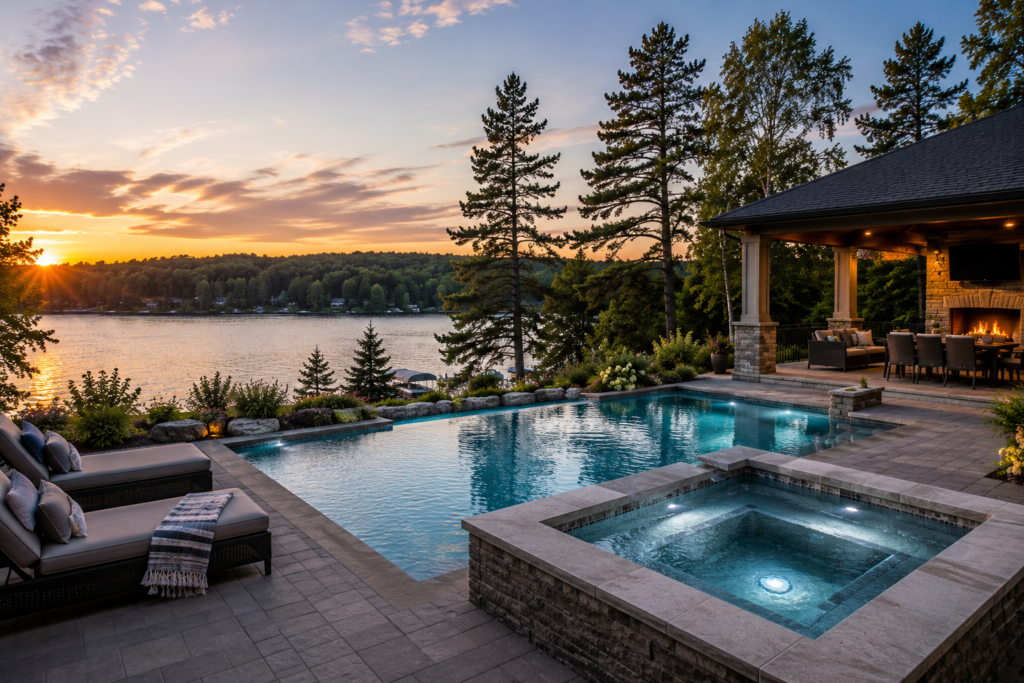
How a Ruling About “Swimply” Will Prevent Childhood Drownings
Like AirBNB, VRBO, and other short-term rental platforms, Swimply provides homeowners a platform to rent out their pool or hot tub. This, of course, comes with a bevy of risks as homeowners enter the commercial marketplace, allow a transient population to use their pool or hot tubs, and often do so without necessary drowning preventions safeguards in place. Now, following a recent decision by the Minnesota Court of Appeals, the risk posed by such rentals will decrease.
In 2008, after a young girl died from suction entrapment with a country club pool, the Minnesota Legislature passed the Abigail Taylor Pool Safety Act. Now codified within Minn. Stat 144.1222, a public pool is defined as, “any pool other than a private residential pool, that is: (1) open to the public generally, whether for a fee or free of charge….” Initially enacted to enhance pool safety requirements, the Minnesota Court of Appeals recently held that residential pools and hot tubs offered for rental on the Swimply app are to be considered “public pools” under this definition. As the Court deftly explained, “We see no ambiguity in the term ‘open to the public generally’ and conclude that it plainly includes a homeowner’s pool that is rented to the public through a shared economy application or other platform.”
Holding that these pools-for-rent are, indeed, commercial or public is a long-overdue acknowledgment of reality. For years, the law has lagged behind the marketplace, clinging to outdated distinctions between private and public spaces while a booming short-term rental economy has quietly transformed backyards into profit-generating aquatic venues. As such, the Court’s decision should not be viewed as an endpoint. It should be the beginning of a broader, nationwide recalibration. The truth is simple: when you rent out a pool to strangers, you are no longer operating a private amenity—you are running a business.
Platforms like Swimply are building an industry on monetizing residential pools by the hour. Property owners advertise amenities, set rules, collect fees, and invite members of the public—often complete strangers—onto their premises. Yet when tragedy strikes, these same operators frequently attempt to retreat behind the legal protections afforded to private homeowners. That contradiction is not just intellectually dishonest—it is dangerous.
Drowning remains one of the leading causes of accidental death, particularly among children. The risks are well-documented: lapses in or a lack of supervision, inadequate barriers, poor visibility, absence of rescue equipment, and delayed emergency response. These risks do not diminish simply because a pool sits behind a single-family home. If anything, they are exacerbated when that home is repurposed for transient, high-turnover use without the safeguards required of traditional commercial aquatic facilities.
Hotels, resorts, and community pools are subject to stringent safety regulations for a reason. They must comply with barrier requirements, maintain proper water clarity and chemical balance, install life-saving equipment, and often provide trained personnel or clear emergency protocols. These measures are not simply bureaucratic red tape—they are the product of decades of hard lessons learned through preventable tragedies.
Short-term rental properties and app-based pool rentals, however, have largely operated in a regulatory gray area. They generate revenue like commercial enterprises but evade the responsibilities that come with that status. The result is a patchwork system where identical risks are treated differently based solely on the label attached to the property.
This Minnesota decision begins to close that gap. What is needed next is uniformity, and not just throughout Minnesota, but across the country. All states should follow this lead and explicitly classify any residential property that rents out its pool—whether by the hour, day, or week—as a commercial operation for purposes of safety regulation. This classification should not depend on the platform used or the duration of the rental. The defining factor is the commercial exchange itself. With that classification must come clear, enforceable requirements: barriers affixed with self-closing, self-latching gates, depth markers, safety lines, readily accessible lifesaving equipment, maintenance and recording of proper water chemistry levels, and installing trained supervision when appropriate, among other measures. These are not radical demands. They are baseline protections that already exist in other commercial contexts. In no uncertain terms, by requiring these within the short-term rental market, we will save lives.
We will decrease childhood drownings.
Partner Ali Sieben is a trial attorney with Schwebel, Goetz, & Sieben and has been recognized as a Minnesota “Super Lawyer”, a Board of Governor Member of the Minnesota Association for Justice, a member of the International Society of Barristers and a member of the American Board of Trial Advocates since 2017.
Adam Finkel is a partner with The Haggard Law Firm (Coral Gables, FL), a member of the National Drowning Prevention Alliance, and serves as the chair of the American Association for Justice’s Nationwide Drowning Prevention Litigation Group. He represents those impacted by drownings across the country, including within Minnesota.
Ali and Adam recently collaborated and secured a $4.25 Million Dollar settlement involving a wrongful death drowning within a Minnesota apartment complex.